
•Menu
•Tin đọc nhiều
•Tin ngẫu nhiên
-
 Làn
điệu
Phương
Nam
trở
lại
Làn
điệu
Phương
Nam
trở
lại -
 Ngân
mãi
chuông
vàng
tháng
12:
Tiếng
sáo
đêm
trăng
Ngân
mãi
chuông
vàng
tháng
12:
Tiếng
sáo
đêm
trăng -
 Cải
lương
phương
Nam
ra
mắt
tại
3
thành
phố
lớn
phía
Bắc
Cải
lương
phương
Nam
ra
mắt
tại
3
thành
phố
lớn
phía
Bắc -
 Nghệ
sĩ
Minh
Cảnh,
nửa
thế
kỷ
với
cải
lương
Nghệ
sĩ
Minh
Cảnh,
nửa
thế
kỷ
với
cải
lương -
 Cẩm
Vân
khóc
nức
nở
khi
kể
lại
tai
nạn
kinh
hoàng
của
2
con
gái
Cẩm
Vân
khóc
nức
nở
khi
kể
lại
tai
nạn
kinh
hoàng
của
2
con
gái -
 Gặp
lại
ca
sĩ
Lệ
Thu
ở
Paris
Gặp
lại
ca
sĩ
Lệ
Thu
ở
Paris -
 Văn
nghệ
sĩ
trước
thềm
Festival
Văn
nghệ
sĩ
trước
thềm
Festival -
 Xu
hướng
áo
dài
nam
năm
2017
Xu
hướng
áo
dài
nam
năm
2017 -
 Khởi
công
vở
cải
lương
“Công
chúa
Huyền
Trân”
Khởi
công
vở
cải
lương
“Công
chúa
Huyền
Trân” -
 Nghệ
sĩ
Quang
Khải:
Mong
có
đất
diễn
để
thể
hiện
tài
năng
Nghệ
sĩ
Quang
Khải:
Mong
có
đất
diễn
để
thể
hiện
tài
năng
•Thống kê truy cập
 Đang
truy
cập
:
519
Đang
truy
cập
:
519
•Máy chủ tìm kiếm : 20
•Khách viếng thăm : 499
 Hôm
nay
:
95065
Hôm
nay
:
95065
 Tháng
hiện
tại
:
939590
Tháng
hiện
tại
:
939590
 Tổng
lượt
truy
cập
:
127425087
Tổng
lượt
truy
cập
:
127425087
 »
Tin
Tức
»
English
»
Tin
Tức
»
English

Bánh Kem Sinh Nhật Web cailuongvietnam.com lần thứ 22 - Happy Birthday CLVNCOM 2004 - 2026
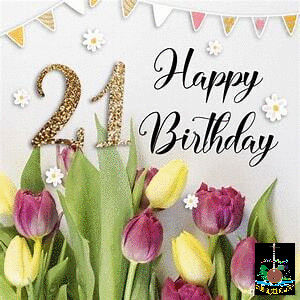
13/4 đến rồi 13/4 về cũng như ngày Tết vậy, sinh nhật web lần thứ 22 của web cailuongvietnam.com lại đến, xin chúc trang web và Àdmin luôn được nhiều sức khoè. được sự tin yêu của bạn đọc và luôn là nơi dừng bước của khách mộ điệu nghệ thuật cải lương, quá khứ vàng son hay một tương lai vô định với những giấy phút tìm về, trăn trổ hướng đi, phát triển... hay...
HISTORY OF VIETNAMESE MUSIC
Đăng lúc: Thứ ba - 03/06/2014 08:34 - Đã xem: 5987
HISTORY OF VIETNAMESE MUSIC
Dedicated to the traditional musicians of Vietnam:
“May their Art flourish and their creativity be reborn”
The Vietnamese have produced several worthwhile books about music but these have remained buried in the relative obscurity of the Vietnamese language.
THE
PAST
HISTORY
OF
VIETNAMESE
MUSIC
The
music
of
Vietnam
and
its
history
are
too
complex
to
be
described
briefly.
True,
to
a
large
extent,
Vietnamese
music
was
handed
down
from
one
generation
to
another.
I
am
spending
my
life
studying
music
of
every
corner
of
the
country,
and
am
fortunate,
however,
in
having
some
various
written
and
oral
sources
on
my
research.
It
is
hoped
that
the
present
information
will
prove
both
informative
and
entertaining
to
those
who
have
been
attracted
to
Vietnamese
music.
The
exact
ethnological
origin
of
the
Vietnamese
music
is
not
clearly
known.
In
addition
to
the
Chinese,
Korean,
Mongolian
and
Southeast
Asian’s
influences
found
in
archeological
remnants,
there
seems
to
be
something
that
can
only
be
explained
as
indigenously
Vietnamese.
Along
with
Chinese
literature,
architecture,
government,
and
religion,
Vietnam
had
adopted
Chinese
music
models
and
developed
music
of
her
own.
However,
in
the
process
of
adaptation,
the
system
was
likely
reshaped
by
the
Vietnamese
people
according
to
their
own
well
established
habit.
Western
music
is
easily
understood
by
Westerners
because
it
is
part
of
their
own
heritage.
A
large
part
of
Vietnamese
music
is
either
incomprehensible
to
them
or
greatly
oversimplified
for
them
by
convenient
stereotypes
provided
by
only
partially-informed
writers,
who
sometimes
confuse
it
with
that
of
China.
Therefore,
before
Westerners
could
understand
Vietnamese
music,
they
must
first
have
an
idea
of
its
place
in
the
general
history
of
Vietnam.
Because
of
her
geographical
locations,
Vietnam
belongs
as
much
to
East-Asia
as
to
South-Asia.
Moreover,
Vietnam
was
under
Chinese
domination
for
a
thousand
years
(from
the
1st
to
the
10th
century).
Besides,
at
the
crossroads
of
peoples
and
civilization,
Vietnam
was
also
in
touch
with
the
people
of
the
ancient
Indianized
Kingdom
of
Champa
(The
Cham
still
exist
in
greatly
reduced
number
as
one
of
the
ethnic
minorities
in
Viet
Nam
today).
Vietnamese
music,
like
Vietnamese
culture,
is
primarily
East
Asian
rather
than
Southeast
Asian.
Its
closest
affinities
are
to
China,
Korea,
Japan,
and
Mongolia.
This
combination
of
influences
has
produced
a
sophisticated
and
multifaceted
musical
culture,
and
it
is
not
surprising
that
Vietnamese
music
shares
many
characteristics
with
that
of
China.
Among
the
common
items
are
the
Pentatonic
(five-tone)
scale,
and
more
than
a
dozen
instruments,
some
of
which
are
central
to
the
music
of
both
cultures.
Vietnam
has
many
kinds
of
music,
and
many
varieties
of
each
musical
form:
The
North,
The
Center
and
The
South
have
their
own
kinds
of
music
including:
Court
music
–
(which
has
eight
subdivisions)
Ceremonial
and
Religious
music
–
The
prayers
of
thanks
and
supplications
of
remembrance.
(Religions
include
Buddhism,
Confucianism,
and
Caodaiism)
Music
for
Entertainment
-
(roughly
comparable
to
Western
Chamber
music)
Folk
music
and
the
ethnic
minorities
-
provide
even
more
variety
with
their
own
ceremonies,
dances
and
songs.
Musical
Theater,
long
popular
in
Vietnam,
divides
clearly
into
three
sections:
The
Folk
Opera
of
the
North
-
resembles
the
opera
comic
and
the
Renovated
Theater
of
the
South
(Hat
Cai
luong).
The
Classical
Theater
of
the
Central
-
akin
to
grand
opera
called
the
“Hat
Boi”.
Legend
claims
that
the
“Hat
Boi”
was
initially
brought
to
Viet
Nam
from
China
by
a
Chinese
invasion
soldier
who
was
captured
by
the
Vietnamese
army.
(1)
The
Renovated
Theater
of
the
South
(Hat
Cai
Luong)
-
a
kind
of
operetta.
It
was
born
in
the
twentieth
century
as
a
mixture
of
Chamber
music,
French
theater,
and
traditional
element.
(2)
-------------------------------------------------------------
(1)The
Hat
Boi
is
a
conventionalized
and
symbolic
art
form,
not
at
all
a
realistic
one.
The
Vietnamese
Hat
Boi
borrowed
from
Chinese
opera
the
symbolic
use
of
scenery,
the
costumes,
makeup,
and
the
gestures.
Its
stories
remain
mostly
Chinese
or
translations
of
Chinese
historical
tales
which
have
a
Confucian
moral.
Musically,
in
Hat
Boi
the
percussion
is
the
most
important
element.
The
largest
drum
is
the
“trô''
ng
chiên”
(battle
drum),
which
punctuates
declamations
and
accompanies
songs
and
dances,
and
also
leads
the
orchestra.
The
second
most
important
musician
plays
the
“Kèn”
(oboe
or
sona).
The
“Kèn”
in
Vietnamese
ears
“rips
the
heart
from
your
intestines”,
and
it
is
therefore
also
used
in
funeral
music.
The
“dan
Co
or
dan
Nhi
and
the
dan
Gao”
(2
stringed-fiddle)
is
especially
used
to
accompany
declamations.
Percussion
instruments
include
Gongs
and
Cliquettes,
and
sometimes
also
the
buffalo
horn
and
Cymbals.
Today,
the
Hat
Boi
is
in
a
period
of
decline
(2)
The
Hat
Cai
luong
-
The
growth
of
the
Hat
Cai
luong
made
it
necessary
to
have
a
great
deal
of
additional
music.
The
Nhac
Tai
Tu
music
was
not
enough;
so
many
new
pieces
were
written,
particularly
shorter
selections
to
fit
particular
kinds
of
action.
Singing
is
the
most
important
feature,
as
70
%
to
80
%
of
a
performance
may
be
devoted
to
songs,
accompanied
by
instruments
such
as
the
“dan
Kim”
or
“dan
Nguyet”
(moon
shaped-lute),
the
“dan
Tranh”
(Zither),
the
“dan
Co”
or
“dan
Nhi”
and
the
“dan
Gao”
(2
stringed-fiddle),
the
“dan
Tam”
(3
nylon
strings
fretless
lute),
the
“dan
Doc
huyen”
or
“dan
Bau”
(monochord).
The
Hat
Cai
luong
has
increased
its
popularity
over
the
years
compared
with
the
Hat
Boi.
Nguồn tin: NS Nguyen Vinh Bao
Những tin mới hơn
- Actress Bich Hanh’s biography and memories (12/07/2014)
- Early days in Le Thuy’s performing career (23/07/2014)
- The meaning & history of SaiGon - Ý nghĩa và lịch sử Sài Gòn (29/07/2014)
- Actress Thanh Thanh Hoa – The Gold Medalist of the Prestigious Thanh Tam Award in 1961 (15/08/2014)
- THE SURVIVAL OF THE TRADITIONAL MUSIC (NHAC CO TRUYEN) (05/07/2014)
- Sixty Zitherists perform in HCMC (03/07/2014)
- Actress UT BACH LAN – An Artist’s Life is Like a Short-lived Flower (11/06/2014)
- Vọng Cổ : Sáu Câu (Six Phrases) (18/06/2014)
- Actor Viet Hung (28/06/2014)
- Bach Tuyet, A Precious Gem of Cai luong (06/06/2014)
Những tin cũ hơn
- Cai luong legend comes to life in photos (29/05/2014)
- Vietnam has full Vietnam has full foundation on sovereignty over Hoang Sa, Truong Sa (27/05/2014)
- Ex-ethnic beauty queen says victory made her miserable (25/05/2014)
- Vietnam provinces pledge support foreign investors after riots (18/05/2014)
- Op-Ed: The greatest Mother’s Day gift (10/05/2014)
- Traditional Vietnamese music festival kicks off in Bac Lieu (23/04/2014)
- Sad life stories of “Đờn ca tài tử” elite stars (01/04/2014)
- Remembering a hick (hai lua) named Sen (26/03/2014)
- MÁU NHUỘM SÂN CHÙA - YÊN LANG (18/03/2014)
- Ha Long Carnival to take place on April 30 (14/03/2014)
Mã
an
toàn:

•CHUYỂN ĐẾN WEBSITE...
•Tin mới nhất
-
 Bánh
Kem
Sinh
Nhật
Web
cailuongvietnam.com
lần
thứ
22
-
Happy
Birthday
CLVNCOM
2004
-
2026
Bánh
Kem
Sinh
Nhật
Web
cailuongvietnam.com
lần
thứ
22
-
Happy
Birthday
CLVNCOM
2004
-
2026 -
 CAILUONGVIETNAM.COM
22
TUỔI
*
13/04/2004
-
13/04/2026
CAILUONGVIETNAM.COM
22
TUỔI
*
13/04/2004
-
13/04/2026 -
 CAILUONGVIETNAM.COM
13/04/2004
-
13/04/2025
CAILUONGVIETNAM.COM
13/04/2004
-
13/04/2025 -
 Thí
sinh
Lê
Hoàng
Nghi
đoạt
giải
Chuông
vàng
vọng
cổ
lần
thứ
19
–
năm
2024
Thí
sinh
Lê
Hoàng
Nghi
đoạt
giải
Chuông
vàng
vọng
cổ
lần
thứ
19
–
năm
2024 - Giữ bản sắc cho cải lương tuồng cổ
-
 “Đêm
huyền
thoại”
quy
tụ
nhiều
ngôi
sao
sân
khấu
cải
lương
“Đêm
huyền
thoại”
quy
tụ
nhiều
ngôi
sao
sân
khấu
cải
lương -
 Tâm
Sự
Thần
Y
4.0
Tâm
Sự
Thần
Y
4.0 -
 Thông
diệp
của
cải
lương
điện
ảnh
Thông
diệp
của
cải
lương
điện
ảnh -
 NSND
Thanh
Nam
và
nghệ
sĩ
Chí
Tâm
ngồi
ghế
nóng
"Chuông
vàng
vọng
cổ"
lần
thứ
19
-
2024
NSND
Thanh
Nam
và
nghệ
sĩ
Chí
Tâm
ngồi
ghế
nóng
"Chuông
vàng
vọng
cổ"
lần
thứ
19
-
2024 -
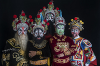 Nhiều
người
trẻ
tâm
huyết
với
nghệ
thuật
hát
bội
Nhiều
người
trẻ
tâm
huyết
với
nghệ
thuật
hát
bội
•Đăng nhập thành viên
- Những Vở Diễn Hay KIỆT TÁC SÂN KHẤU THẾ GIỚI: LÔI VŨ
- Nghệ Sĩ Tâm Sự Ngọc Huyền 'vẫn bị cấm hát tại Việt Nam'
- Đời Thường Nghệ Sĩ Con dâu trẻ của NSUT Thoại Miêu qua đời chưa đầy 2 năm cưới
- Đời Thường Nghệ Sĩ Nghệ sĩ Tú Sương kết hôn với Việt kiều
- Tâm Tư Thành Viên Người trong giới tự nói gì về nghệ sĩ Mỹ Châu ?
- Trân trọng cảm ơn.
- Trân trọng cảm ơn.
- Trong bầu trời nghệ thuật sân khấu cải lương, nghệ sĩ Thành Được mãi là ngôi sao sáng vĩ đại. Ông đã...
- Tôi cũng biết một soạn giả có tên YÊN BA, nhưng tên thật là PHẠM DIỆP PHƯƠNG, là quân y, KBC 7019
- Bài viết khá đầy đủ về cuộc đời của thầy Văn Hải. Có vài lỗi chính tả không nên có

Bánh Kem Sinh Nhật Web cailuongvietnam.com lần thứ 22 - Happy Birthday CLVNCOM 2004 - 2026
13/4 đến rồi 13/4 về cũng như ngày Tết vậy, sinh nhật web lần thứ 22 của web cailuongvietnam.com lại đến, xin chúc trang web và Àdmin luôn được nhiều sức khoè. được sự tin yêu của bạn đọc và luôn là nơi dừng bước của khách mộ điệu nghệ thuật cải lương, quá khứ vàng son hay một tương lai vô định với những giấy phút tìm về, trăn trổ hướng đi, phát triển... hay chỉ thư giản thôi.









Ý kiến bạn đọc